
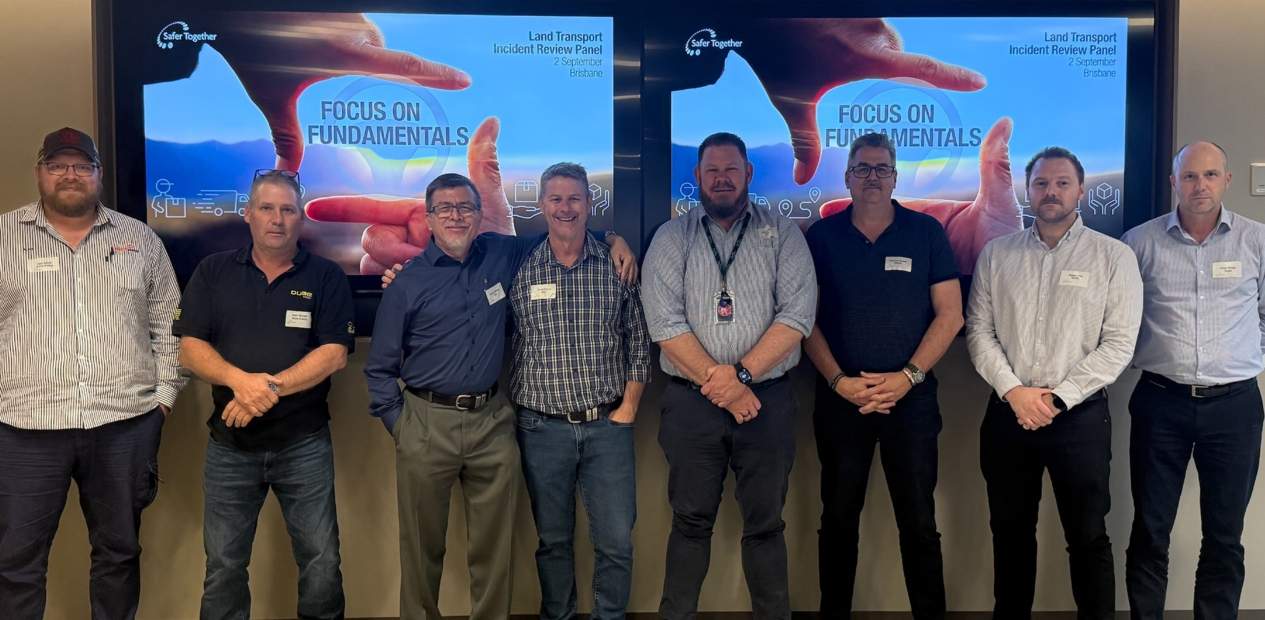
Success in Land Transport comes down to getting the fundamentals right. In addition to modern technologies, we still need to rely on competent drivers with a disciplined approach to road safety. Technologies can improve many things, but it cannot replace good planning, capable people, well-maintained equipment and a strong and robust safety culture.
Dave Pearce (Shell QGC) opened the event with a Safety Moment presentation of a very recent event with a reminder that we cannot remove risk, but we can – through good planning and training – ensure that workers have what they need to minimise negative outcomes.
This was followed by the following three incidents presentations:
- Amron Osmon (Toll) and Alan Althoff (Arrow Energy) – Truck Ingress and Egress
- Mark Riordan (Qube Energy) – Learning from Two Heavy Vehicle Rollovers
- David Herron (MPC Kinetic) - Manual Handling Injury – Wacker Packer
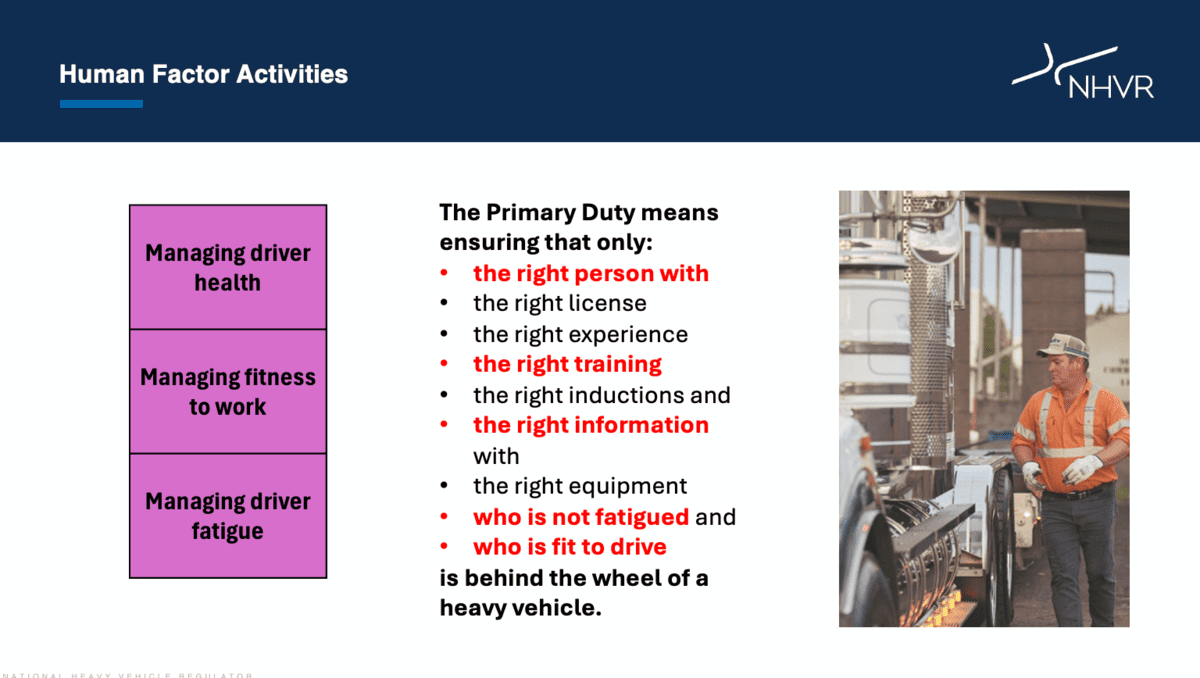
Following a short break, National Heavy Vehicle Regulator representatives Reece Cook and Graeme Cooper then presented on both the Human Factors and Primary Duty perspectives (accordingly) on the new Unfit to Drive duty.
From 1 August 2026, a person must not drive a heavy vehicle on a road while impaired by fatigue or unfit to drive.
- Unfit to Drive recognises that a person's health and fitness - not just fatigue - may impact their ability to drive a heavy vehicle safely
- The duty now applies to all heavy vehicles regulated under the HVNL, not only ‘fatigue-regulated heavy vehicles’
A driver is unfit to drive if at that time, they are not of sufficiently good health or fitness to drive the heavy vehicle safely. Drivers can experience and exhibit a range of signs associated with their health and fitness that may indicate they are unfit to drive including lack of alertness, poor judgement or memory, drowsiness, blurred vision, pain or discomfort or psychological or emotional distress.
These may arise from:
- Physical or mental health conditions;
- Illness or injury;
- The effects of alcohol, other drugs or medication.
The duty requires, and legally empowers drivers to not commence driving, or to stop driving, if their health or fitness affects their ability to drive safely.
The final presentation of the event 'From Monitoring Risk, to Predicting Risk' delivered by Peter Runge (Origin Energy) asked the room to discuss how we (as an industry), utilise our IVMS data, and can we better use it to prevent harm. Many of our members now have significant volumes of driver and vehicle data. However, despite this, similar incidents continue to occur across the industry.
Peter asked the room to consider:
- What data are we collecting that is currently underutilised?
- How are organisations using technology to identify emerging fatigue, distraction or journey risk trends?
- What barriers exist to converting data into action?
- Where have participants seen successful examples of predictive risk management?
- How can industry collaboration improve the use of leading indicators?
He suggested that industry consider how we can move the data upstream — from investigation file to prevention trigger. He proposed that the Land Transport Working Group work with industry to:
- Reframe IVMS/AFDD as leading indicator systems — trend the data before harm occurs, not after,
- Connect fatigue/distraction trends directly to rostering — a spike in AFDD alerts should trigger a roster review, not just a driver conversation,
- Build a just culture pathway: automated in-cab correction → non-punitive coaching → structured conversation → discipline only for willful conduct,
- Use aggregate analytics (route, time, roster pattern) to prioritise systemic controls, not just individual behaviour correction, and
- Access data from ESC and EBS to identify performance of HV, especially high-risk vehicles (tankers)
The event was then closed by Dave Pearce, before delegates retired to a networking function.
Thank you to our event sponsor, Shell QGC.
Members can view the event slide pack here.
If you are interested in joining our Land Transport Working Group – or helping them on a project, email us: [email protected].