

Challenge
For over 50 years, Cleanaway has supported Australians to responsibly manage, recover, and dispose of waste to achieve sustainable outcomes. With a workforce of more than 10,000 people, a national network of over 350 sites, and the largest waste management fleet in Australia, Cleanaway provides end-to-end waste management services spanning the entire lifecycle: collection, processing, recycling, treatment, and safe disposal.
Cleanaway’s essential services are inherently high risk, with the potential for serious injury or environmental impact. Frontline workers are best positioned to understand how work is performed and, as a result, often have the most practical and effective safety solutions.
For large organisations, the challenge is addressing the gap between operational risk and frontline engagement. This requires establishing structures that maximise the input and influence of frontline workers in developing and implementing Health, Safety and Environment (HSE) improvements.
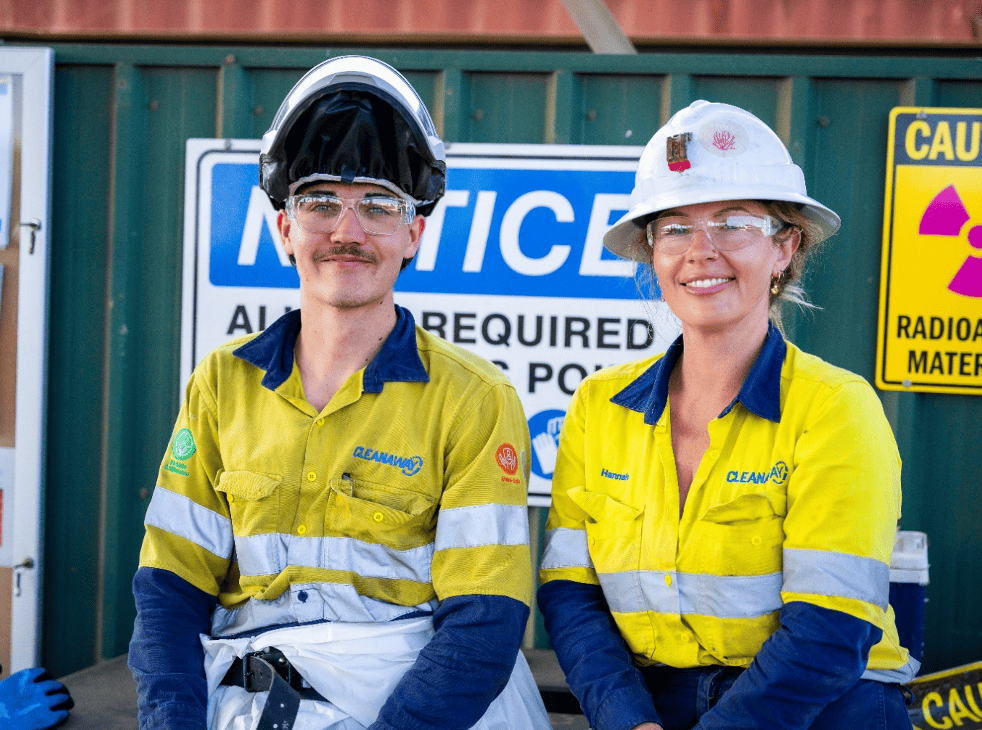
Workers elected by their peers to represent health, safety, and environmental interests, referred to as Frontline Health, Safety and Environment Representatives (HSERs), can be powerful change agents when supported with the right tools and enabled by a positive learning culture.
Historically, Cleanaway had a limited number of active elected frontline HSRs, meaning valuable site-level knowledge was often siloed.

Solution
Building HSE capability and ownership among frontline personnel is essential to embedding a strong learning culture.
To support organisations on this journey, Safer Together developed an interactive onboarding and support framework, along with associated tools, to establish a best practice benchmark for:
- HSER roles and responsibilities
- Building HSER leadership capability and skills
- Establishing clear communication channels and connecting HSERs to promote proactive sharing of learnings, lessons, and best practice
These resources provided a structured foundation that Cleanaway used to shape its Frontline HSER Program. The inclusion of “Environment” in the role aligned closely with Cleanaway’s foundations of Safety and Environment and its Guiding Principles, including “Keep each other safe.” This principle encompasses physical, psychological, and process safety, as well as environmental protection.
Cleanaway’s objective was to formalise the voice of its frontline workforce by leveraging their unique understanding of how work is performed, and by enabling a team-led approach to identifying and implementing effective controls.

Result
The first step was to establish centralised Program Coordinators. These coordinators developed a comprehensive register of existing elected HSRs and their line managers and engaged with them to better understand the current state of role clarity and support.
The next step involved reviewing the Safer Together HSER Framework and supporting resources to assess how they could be tailored to ensure they were fit-for-purpose for Cleanaway’s operations.
A Steering Committee was established to provide executive oversight and direction. A Working Group, comprising two HSERs, two Site Managers, and HS&E business partners was also formed to pilot the framework, guidelines, and tools during development.
Once the guides and tools reached final draft stage, and following a mapping exercise against relevant legislative requirements, Cleanaway piloted the updated resources across five sites nationally. End user feedback was incorporated into the final revisions.
Given Cleanaway’s scale (350+ sites), the HSER program was implemented through a phased rollout. General Managers received clear communication regarding release timelines and leadership expectations. The central team conducted rollout sessions with each General Manager, their leadership teams, and HS&E business partners. The release schedule was agreed at the EGM level, taking into account broader business priorities.
Broader communication was delivered through townhall sessions with the HSE team, engagement with other business functions (such as Customer Service), and targeted site visits.
The support team also partnered with the IT function to equip all frontline HSERs with a Cleanaway email account, a laptop, and access to the company’s online portal and resources.
The design, development, and phased rollout of the HSER Program occurred over a 12-month period. Since implementation, there has been a 240% increase in frontline HSERs, with continued growth planned.

Embedding the HSER Program is an ongoing process; however, a wide range of positive outcomes have already been achieved:
- Clear roles and responsibilities for HSERs and line managers through a centralised program supported by a dedicated Program Coordinator.
- A structured onboarding and induction process for HSERs and line managers, including:
- HSER/Line Manager Welcome Sessions: Weekly face-to-face sessions introducing key elements of the program and role expectations for HSERs and their line managers;
- HSER/Line Manager eLearning: Role-specific online modules outlining responsibilities and legal requirements;
- HSER Resource Folder: A comprehensive hard-copy toolkit of guides and resources provided to all HSERs;
- 5-day Comcare-approved HSR training: All HSERs are required to complete the training as a mandatory requirement by Cleanaway.
- A dedicated central support team that provides guidance and direction about systems and processes that help support HSERs and line managers.
- A centralised HSER Knowledge Centre on the Cleanaway portal.
- A library of HSER Success Stories to capture and share learnings.
- Ongoing learning, capability development, and networking opportunities, including:
- Monthly HSER Learning Sessions focused on HSE topics such as hazard identification and risk control;
- Quarterly HSER Town Halls featuring guest speakers, success story deep dives, recognition, and program updates;
- HSER Learning Pathways Guide to support development of leadership and communication skills;
- State-based HSER Forums (under development) to enable in-person collaboration.
- Strong support from the executive leadership team and senior leaders in driving participation and providing the necessary time and resources.
Most importantly, site feedback indicates improved frontline engagement and ownership of safety and environmental outcomes. HSERs are actively identifying risks and working collaboratively with their designated workgroups and line managers to implement practical controls to either eliminate or reduce the risk to frontline workers. Learnings are also being shared across the organisation through multiple channels.

The Frontline HSER Program has been well received by Cleanaway’s HSERs because they can see the benefits for themselves:
"From a frontline perspective, the HSER program has been incredibly worthwhile. Having a clear structure and strong support network allows workers to feel heard by management. It equips those passionate about HSE with the tools to make a real difference. It has strengthened our HSE culture and created great opportunities to collaborate with other worksites across the business doing the same things. The shared learnings have the potential to impact our worksites in such a positive way." (Plant Operator, Chandler - QLD)
"This program has been very beneficial and eye-opening. I’ve learned a great deal and connected with many people across the business. Leadership consistently goes above and beyond to make sure we feel empowered to raise concerns. I would recommend this initiative to anyone wanting to contribute more to their site. I'm looking forward to the continued learning opportunities and connections that will be made in the future through this program" (Driver and Operator, Padstow – QLD)

Lessons Learnt

Leaders Must Lead
Strong leadership endorsement is critical. Visible commitment from senior leaders establishes the HSER program as a core organisational priority, not just another initiative. It drives accountability and ensures that resources, training, and time commitments are prioritised for frontline HSE Representatives.
Integrate, Don’t Isolate
Integration across support functions is essential. A coordinated approach transforms the program into a cohesive business program, ensuring consistent and timely support for HSERs across all business units.
Centralised Coordination is Vital to Success
A dedicated Program Coordinator is key to success. This role ensures effective delivery of training, access to resources, and clear communication across a large and complex organisation. It also helps secure leadership alignment and cross-functional support, enabling HSERs to fulfil their roles effectively.
Download the Case Study Poster here.
For more information about Cleanaway click here.